Road Trips in the Dominican Republic: Four Routes Worth Driving
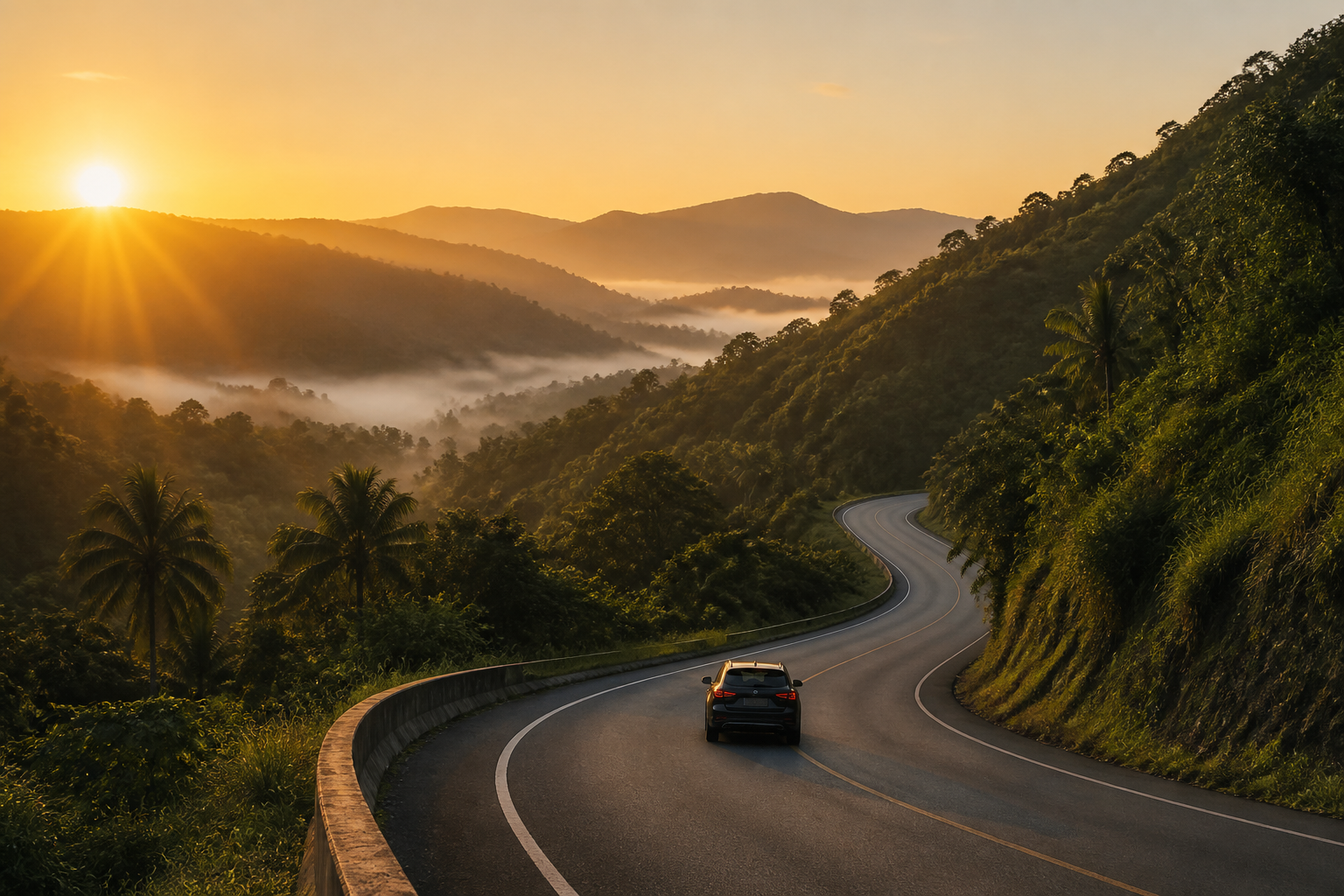
The Dominican Republic is unusually well suited to road trips for a Caribbean country, and the reason is geography. It shares an island roughly the size of Ireland with Haiti, and within a four-hour drive you can go from Caribbean beach to a mountain valley at 1,200 meters to a desert coastline. The country also holds the highest peak in the Caribbean, Pico Duarte at 3,087 meters. Most visitors never see any of it because they stay inside a resort corridor. In Nelly Rent a Car we have driven these routes for more than 60 years. Here are four worth your time.
The two coastal routes: east and north
The eastern route is the easiest and the most popular. Starting at Las Américas International Airport, you reach Boca Chica in ten minutes and Juan Dolio in thirty, both with calm reef-protected water. Continuing on the Autopista del Este you pass San Pedro de Macorís, then reach La Romana in about an hour, home to Altos de Chavón, a recreated sixteenth-century Mediterranean village whose amphitheater opened in 1982 with a Frank Sinatra concert. Bayahíbe, fifteen minutes further, is the departure point for Isla Saona inside Cotubanamá National Park, and Punta Cana is roughly two hours total via the Autovía del Coral. The northern coastal route runs from Puerto Plata east through Sosúa and Cabarete, one of the Caribbean's recognized kitesurfing destinations, to Río San Juan and Playa Grande, covering over one hundred kilometers of very different beaches on a single road.
The mountain route: Santo Domingo to the Cibao
This is the route that changes what visitors think the country is. From Santo Domingo the Autopista Duarte climbs north through Villa Altagracia and Piedra Blanca to Bonao in a little over an hour, then La Vega forty minutes later. From La Vega you turn into the mountains: Jarabacoa sits among pine forest and waterfalls including Salto de Jimenoa, and Constanza occupies a valley at roughly 1,200 meters where the temperature drops into the teens Celsius at night and farmers grow strawberries and garlic. Santiago de los Caballeros, the country's second city and the heart of its cigar industry, is about two and a half hours from the capital, and Puerto Plata another hour beyond. An SUV is genuinely recommended for the Constanza leg, particularly the Casabito road, which is narrow with afternoon fog.
The southwest route: the one almost nobody drives
This is the most spectacular and the least traveled. Heading west from Santo Domingo on the Carretera Sánchez you pass Baní and Azua before reaching Barahona in roughly three and a half hours. From there the coastal road toward Paraíso and Enriquillo runs along cliffs above the Caribbean, with rivers emptying directly onto pebble beaches, and continues toward Bahía de las Águilas inside Jaragua National Park, widely considered the most untouched beach in the country. The warnings here are real and worth respecting: fuel stations are sparse, mobile coverage drops out in stretches, and the road becomes mountainous with tight curves past Barahona. Allow three days minimum and take a high-clearance vehicle. This is the route for travelers who have already seen the postcard version of the country.
Frequently Asked Questions
Is a road trip in the Dominican Republic a good idea?
Yes, and it is the only practical way to see more than one region. The country is compact, main highways are in good condition, and the landscape changes dramatically within a few hours of driving. The realistic precautions are doing long transfers in daylight, carrying cash in pesos for tolls, and filling the tank before leaving populated areas rather than when the gauge drops.
How many days do I need for a Dominican Republic road trip?
Three days covers one route comfortably, such as the eastern coast or the Cibao mountains. Five to seven days lets you combine two regions, for example flying into Las Américas, driving the Cibao route to Puerto Plata, and returning along the north coast. The southwest route toward Bahía de las Águilas needs three days on its own because of the distances involved.
Can I pick up a car in one city and return it in another?
Yes, provided the rental company has offices in both places, which is what makes a genuine one-way road trip possible. Nelly Rent a Car operates at Las Américas, Punta Cana, Santiago, and Puerto Plata airports plus a Santo Domingo city office, so routes such as Las Américas to Puerto Plata can be driven without doubling back. Confirm one-way terms when booking.
Do Dominican highways have tolls on road trip routes?
Yes. The Autopista Las Américas, Autopista Duarte, Autovía del Coral toward Punta Cana, and Autovía del Nordeste toward Samaná all have toll booths. Carry cash in Dominican pesos, since card acceptance is inconsistent at booths. Individual tolls are moderate but they add up across a multi-day cross-country route.
What vehicle should I rent for a Dominican Republic road trip?
Match the vehicle to the roughest road on your itinerary. Coastal routes on paved highways are comfortable in a compact or intermediate car. Mountain routes to Jarabacoa and especially Constanza call for an SUV with adequate ground clearance and power. The southwest route past Barahona is best driven in a high-clearance vehicle given road conditions and the distance between services.
Four routes, one island, and landscapes that change completely within a few hours of driving. Nelly Rent a Car has operated in the Dominican Republic for more than 60 years, with locations at Las Américas, Punta Cana, Santiago, and Puerto Plata airports, which makes one-way itineraries possible. Call or WhatsApp us at 809-687-7997, or write to reservas@nellyrac.com.